Dumbwaiter vs Stairlift for Carrying Loads UK: Which Solves Your Problem?
If you're juggling groceries, laundry, or library books on your stairs, or you manage a multi-storey property where goods need moving between floors, you've probably wondered whether a stairlift could help. The answer is often counterintuitive: a stairlift isn't the right tool for the job. A dumbwaiter—a small freight lift designed specifically for goods—is usually what you actually need. Understanding the difference between these two solutions can save you thousands of pounds and prevent a costly mistake.
What's the Actual Difference?
A stairlift is a motorised seat that runs along a rail fitted to your staircase. It lifts a person from one floor to another. That's its entire purpose.
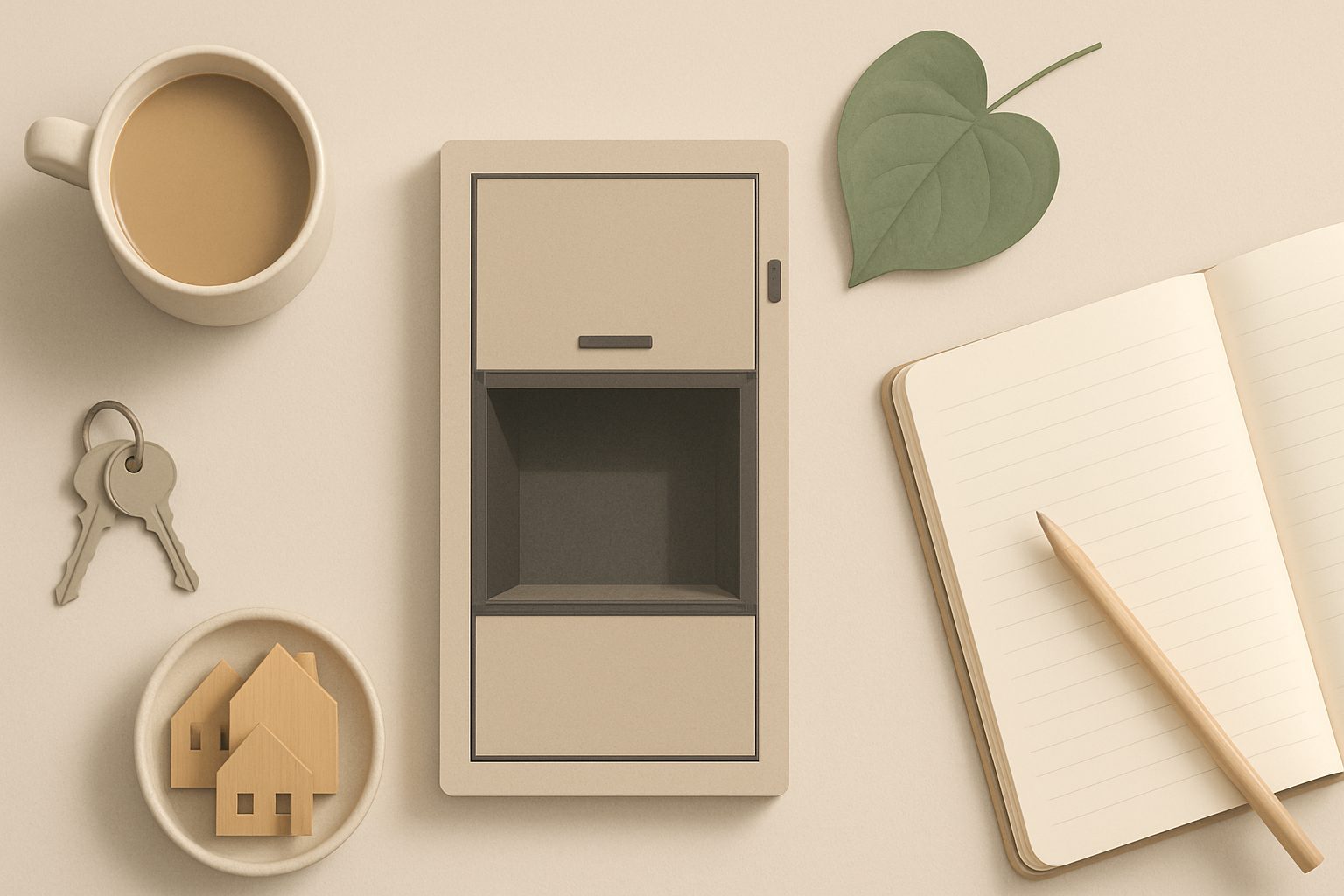
A dumbwaiter is a small lift cabin—about the size of a microwave to a large cupboard—that runs vertically between floors inside a shaft. It carries goods: boxes, laundry baskets, trays, wine bottles, or documents.
The distinction matters because they solve different problems. Stairlifts are for mobility. Dumbwaiters are for logistics. Trying to use a stairlift to move loads is inefficient, potentially unsafe, and defeats the point of either device.
Why Stairlifts Fall Short for Load Carrying
Stairlifts can technically carry lightweight items if someone rides down with them, but this creates several practical problems.
First, you need a passenger every time. If you're moving laundry between the master bedroom and ground-floor utility room, you can't just send the basket down—someone has to sit in the seat, ride down, unload, ride back up, and repeat. For regular, daily load-shifting, this is tedious.
Second, weight limits are modest. Most stairlifts accommodate 120–150 kg total (user plus any small parcels tucked beside them), but not much more. A basket of wet washing easily approaches that limit on its own.
Third, stairlifts are loud and slow. A typical journey takes 30–60 seconds. If you're moving multiple batches of goods, the repetition becomes frustrating.
Fourth, they're visible and take up staircase space. If your hallway is narrow or your stairs are a central architectural feature, a stairlift rail feels like a permanent compromise to your home's layout—even if you rarely use it.
Dumbwaiters: Built for Goods, Not Bodies
A dumbwaiter solves the load-moving problem directly. You load goods into the cabin, press a button, and it travels silently to the floor you need. No passenger required. No repeat journeys.
Capacity ranges from about 50 kg for compact residential models up to 100 kg+ for larger domestic units. That easily handles laundry, crockery, small appliances, office supplies, or groceries.
In commercial settings—restaurants, hotels, care homes, offices—dumbwaiters are standard precisely because they eliminate the inefficiency of human shuttle runs. They work just as well in a domestic context.
The main dumbwaiter models fitted in UK homes operate on electric power, though some smaller units use hand-crank or pulley systems. Electric models are fastest (10–30 seconds per journey) and require minimal physical effort.
Installation and Space: A Real Consideration
This is where the practical difference emerges. Stairlifts require no structural change—they attach to your existing staircase. Installation typically takes a day or two.
Dumbwaiters require a vertical shaft. In new-build homes or where renovation work is already underway, this is straightforward to plan. In an established Victorian terrace or bungalow, it's more disruptive. You need to identify a suitable route—typically running between adjacent rooms vertically—and create the opening.
That said, dumbwaiters don't need a full lift-shaft in the engineering sense. A simple framed opening of 600 mm × 600 mm (or smaller, depending on the unit) is often sufficient. Decorative finish can be a cupboard door or a hinged panel, so the installation blends into the home.
Installation costs for a residential dumbwaiter typically range from £2,000 to £5,000 depending on shaft construction and finishing. Stairlifts run £2,000 to £4,000. The cost difference is real but not vast, especially when you factor in the ongoing frustration of moving loads inefficiently for years.
Cost and Maintenance
Both systems require electricity. Dumbwaiters draw very little power (a few watts when running). Maintenance on either system is modest: occasional servicing to check safety mechanisms and lubricate moving parts. Annual servicing costs £150–£300 for either option.
The real cost difference lies in what you're buying: a transport solution for goods (dumbwaiter) or mobility assistance for a person (stairlift). If you need the former, a stairlift is an expensive way to not solve your problem.
When to Choose Each
Choose a dumbwaiter if:
- You regularly move goods—laundry, groceries, documents, dishes—between floors
- You want to avoid multiple trips up and down stairs
- You're planning renovation work or have space for a small vertical shaft
- You want the convenience and speed of automated transport
Choose a stairlift if:
- You or a household member has mobility difficulties and needs help getting up and down stairs
- Your main concern is safe, assisted movement for a person
- You need a solution with minimal disruption to your home's structure
Might you need both? Rarely. If someone in your home has mobility issues and you also regularly move goods, a dumbwaiter solves the goods problem and a stairlift solves the person problem. But most homes don't face both challenges simultaneously.
The Bottom Line
Stairlifts and dumbwaiters are popular precisely because they each solve a specific, common problem well. The confusion arises because they both move things vertically and cost roughly the same. But a stairlift won't genuinely ease the burden of carrying loads, and a dumbwaiter won't help someone with mobility restrictions.
If your problem is goods, not people, a dumbwaiter is the efficient, modern answer. It's designed for exactly what you're trying to do.
More options
- Electric Home Dumbwaiter Lift (Amazon UK)
- Manual Rope Dumbwaiter Kit (Amazon UK)
- Small Food & Goods Lift Platform (Amazon UK)
- Dumbwaiter Spare Parts & Rope (Amazon UK)
- Domestic Lift Safety Accessories (Amazon UK)